Frauen-Theater-Performance
Nach dem KNOT Festival
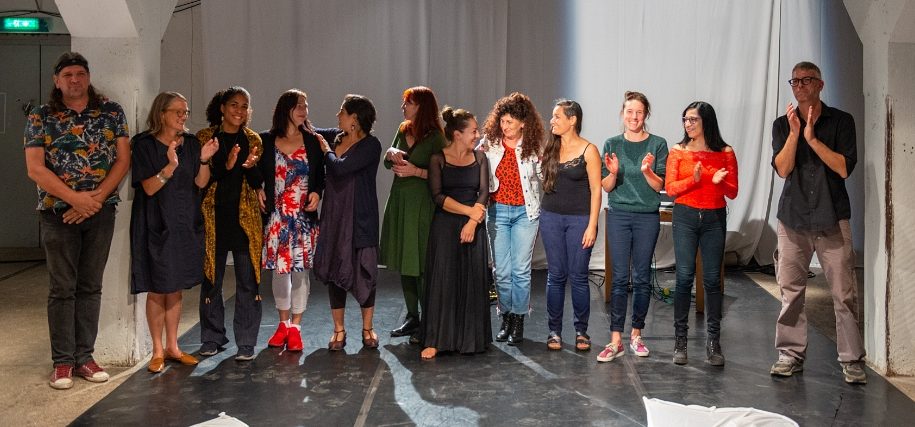
Das Magdalena München KNOT Festival im September war erneut ein voller Erfolg. Die Performances, Workshops und Vorträge waren gut besucht und wurden geschätzt.
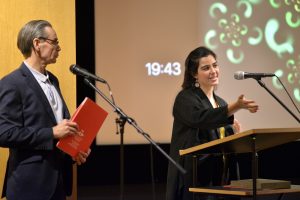
Das Festival wurde am Donnerstag, den 12. September im Instituto Cervantes vom künstlerischen Leiterin des Festivals, Raquel Ro, und Manfred Boes, Kulturreferant am Instituto Cervantes, feierlich eröffnet. Die Festival-Künstlerinnen wurden vorgestellt und Sylvie Marchand zeigte und sprach über ihren Film “Cantar o Morir” (Tanz or sterben).
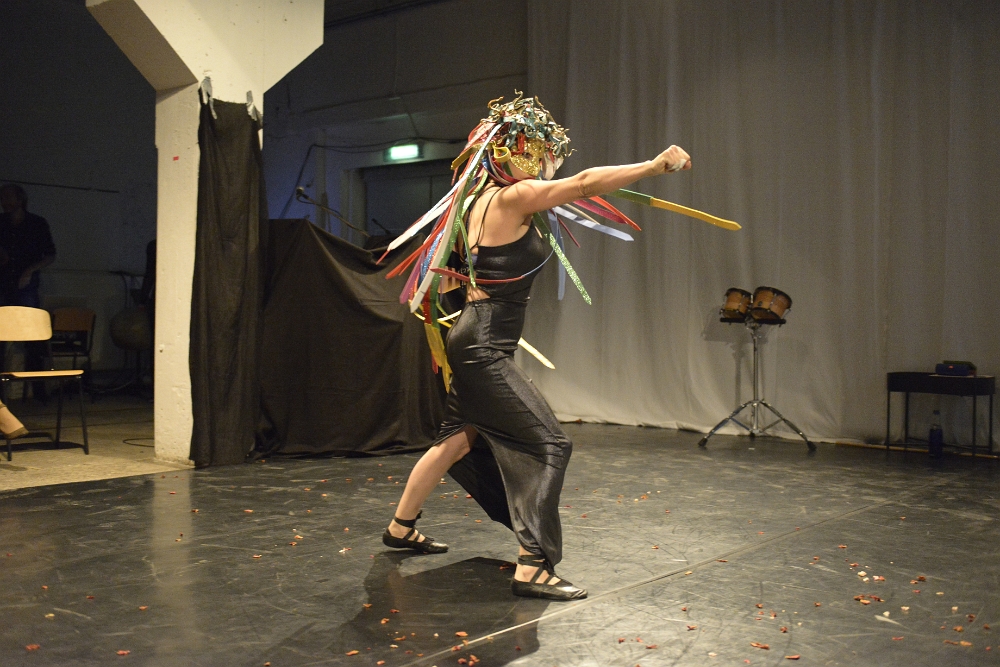
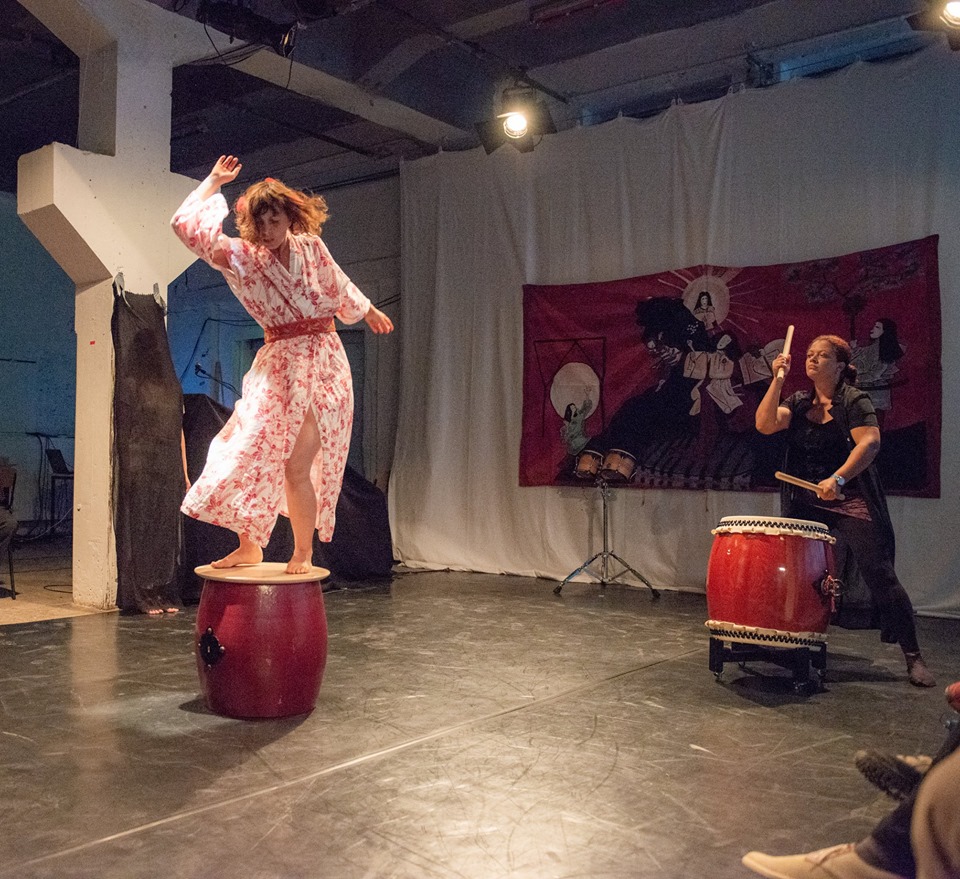
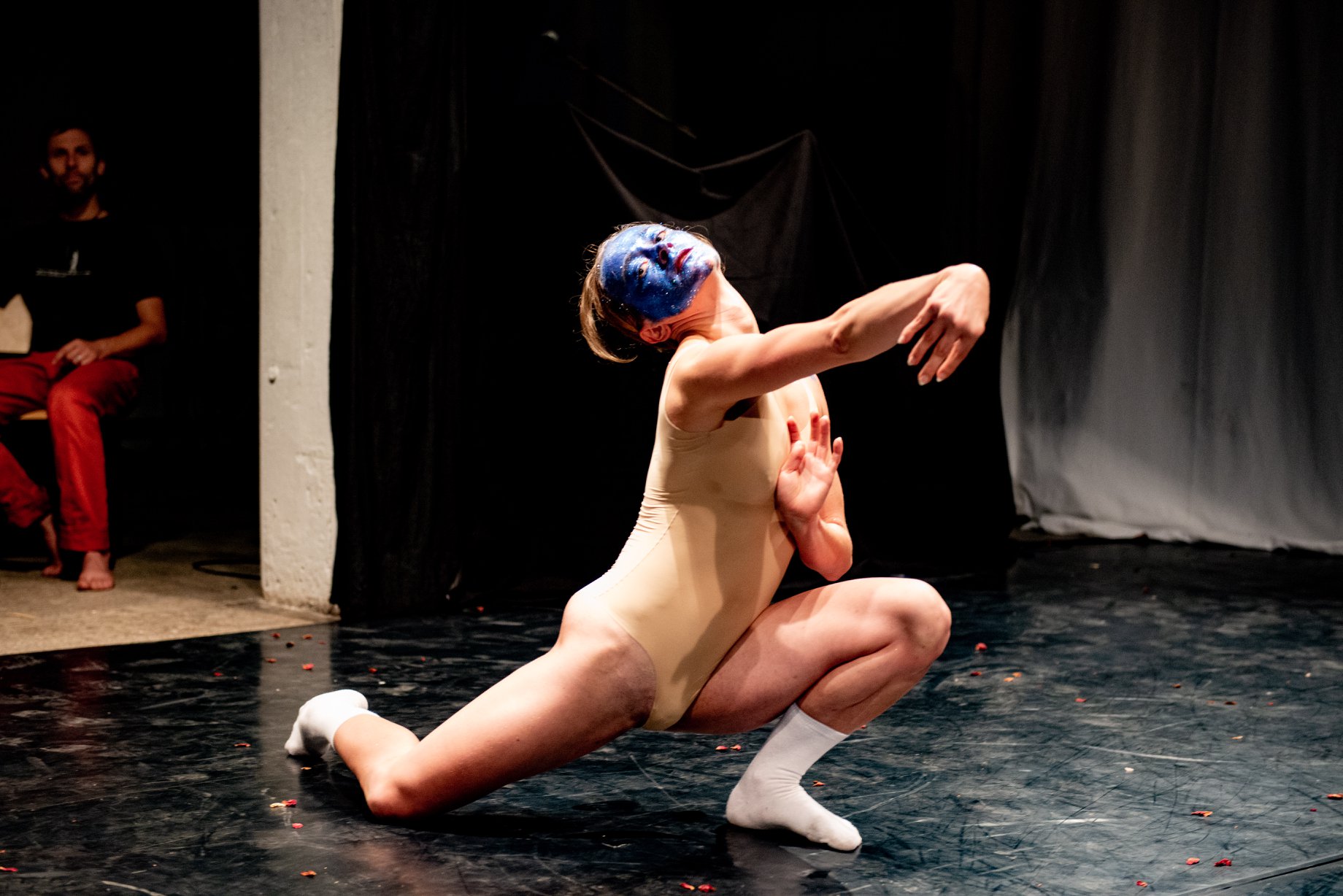
Am Freitagabend fand die “offene Bühne” mit sechs kurzen Performances lokaler Künstler unter der Leitung von Cecilia Bolaños statt. Es folgte “Corpus Mundi – a woman across borders“, eine Solo – Tanzperformance von Barbara Carvalho (gleichzeitig Leiterin des Magdalena – Festivals in Frankfurt) mit Live – Musik von zwei ihrer Kollegen vom Theater Antagon, Bernhard Bub und Rueben Wielsch.
 |
 |
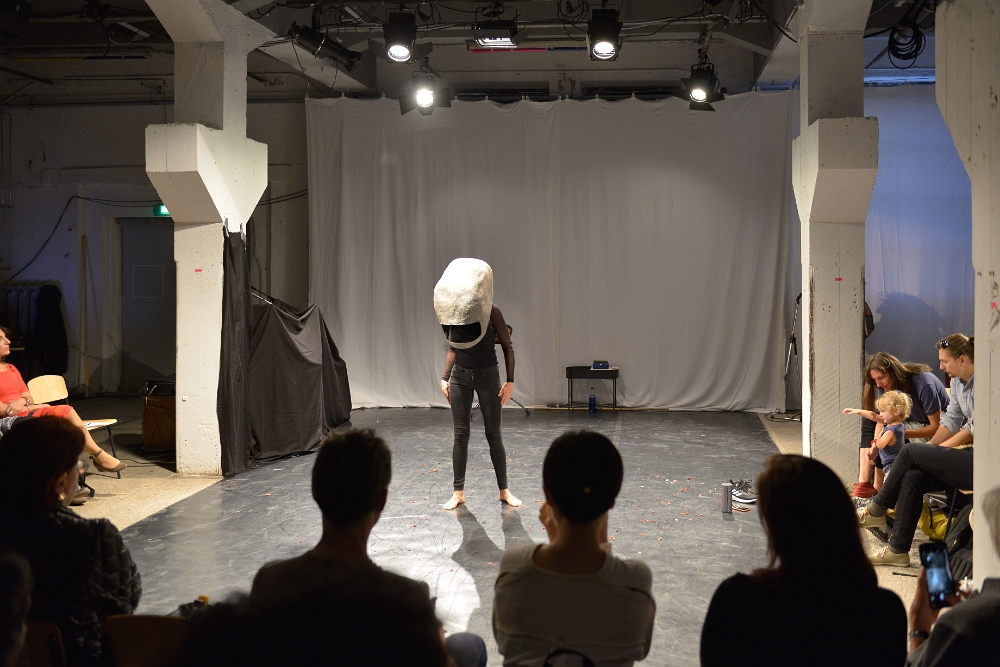 |
| Oben, L>R: Cecilia Bolaños; Volha Karankevich-Koch and Patrizia Bradley-Sorgenfrei; Chrismaria Pfeifer. Fotos: Thomas Hauzenberger. | ||
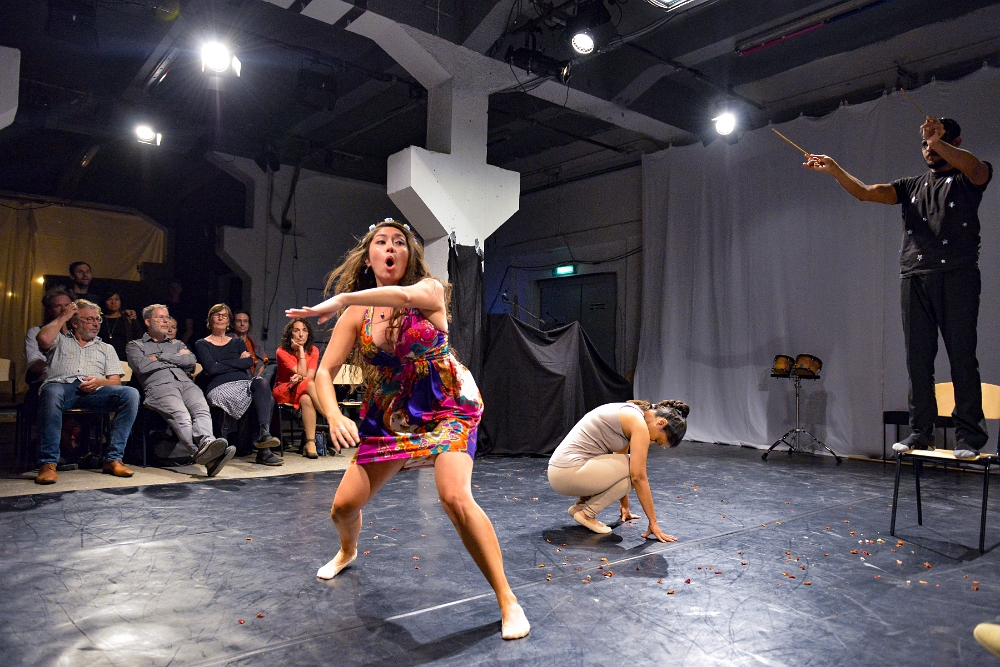 |
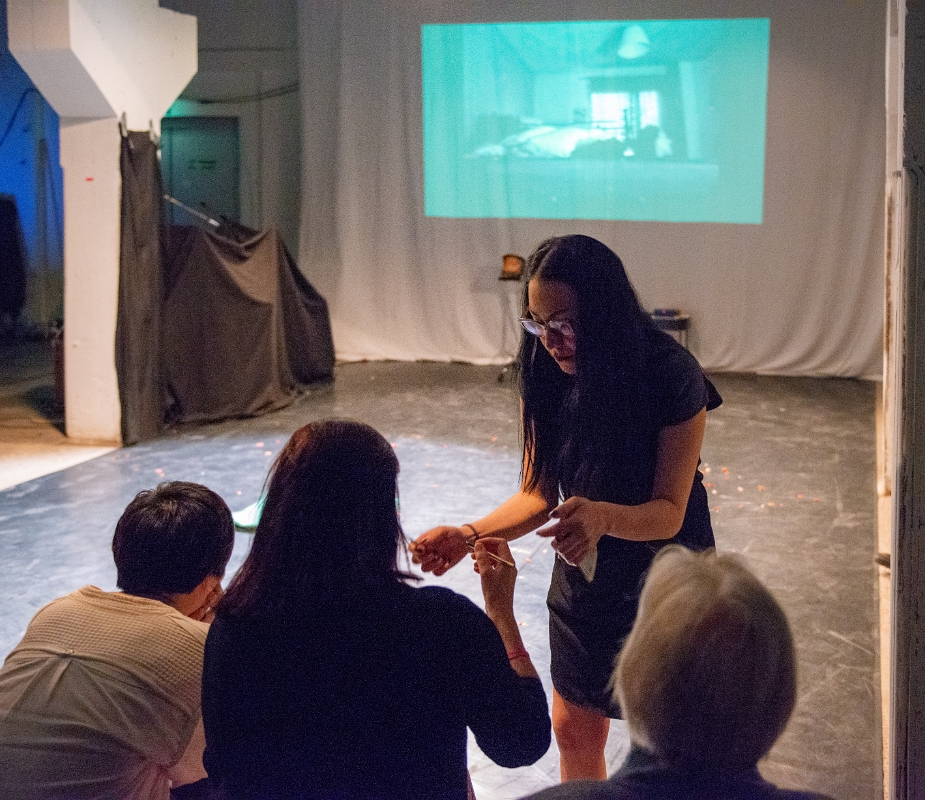 |
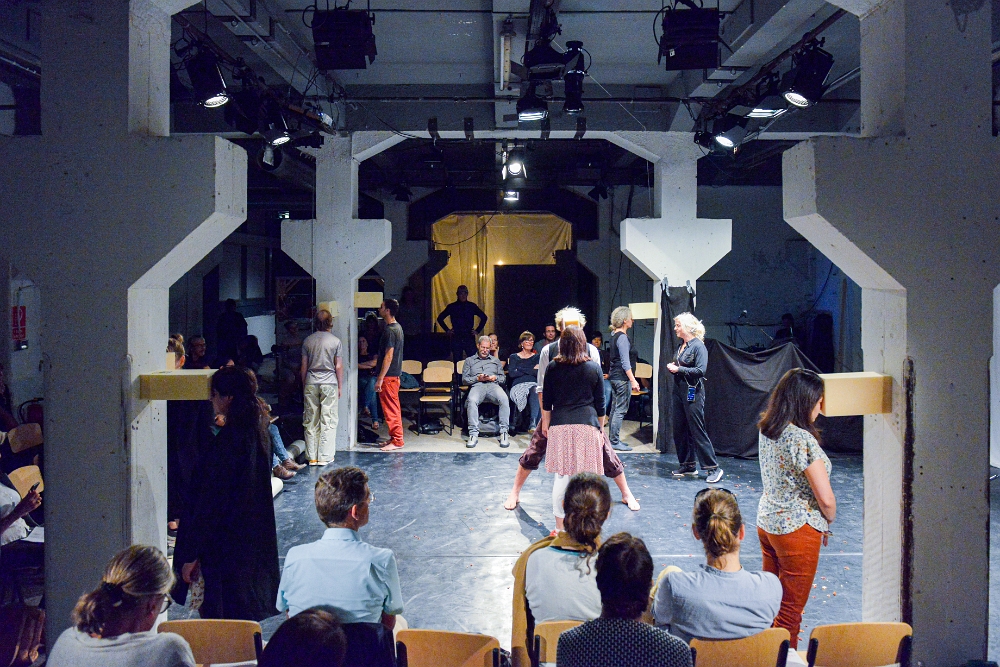 |
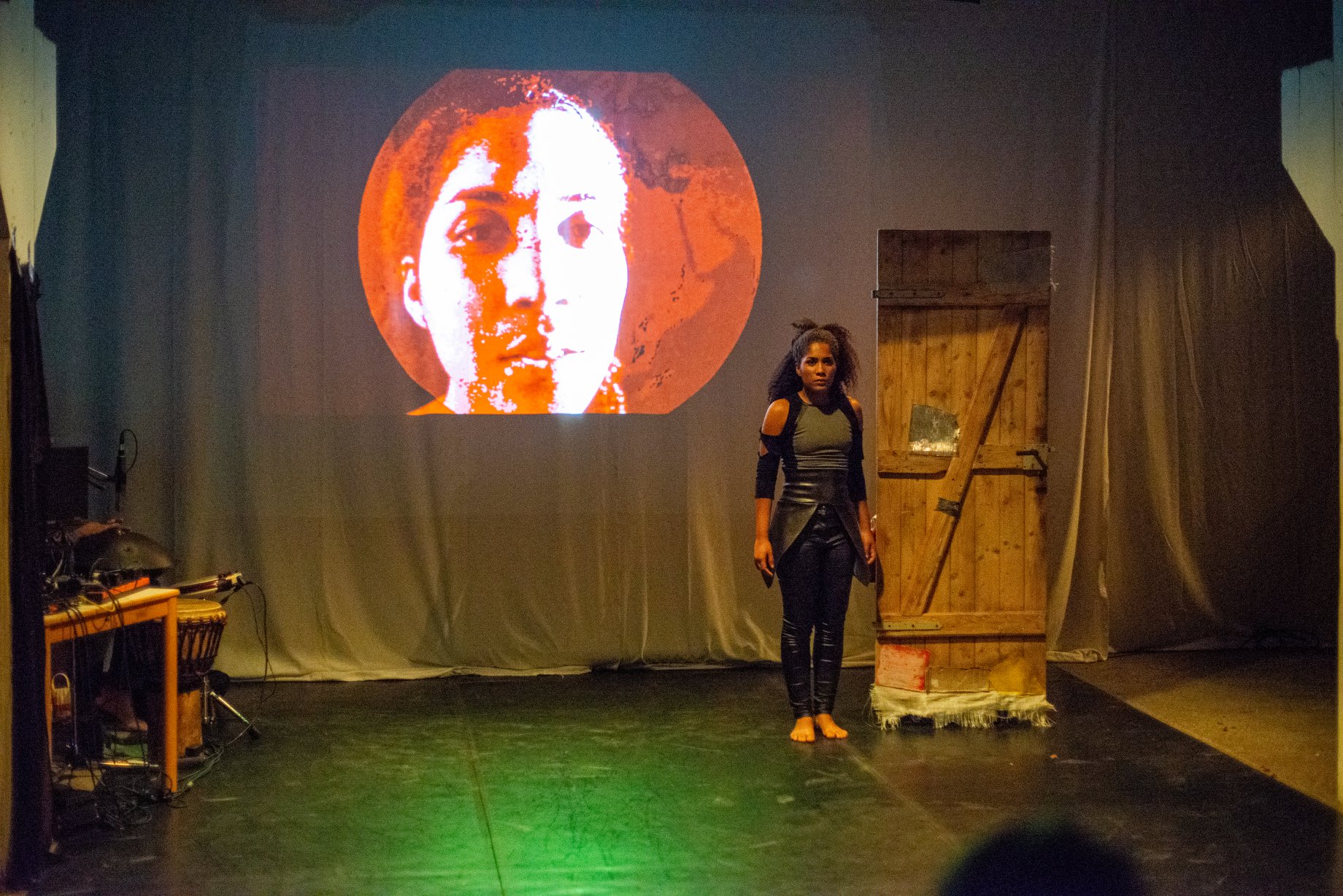
| Oben, L>R: Katherine López, Tanusree Chaudhuri und Vaishak Raju; Gina Saggiante Montero; Susanne Schütte-Steinig. Fotos: Thomas Hauzenberger. | ||
 |
 |
|
| Oben, L>R: Alina Belyagina; Barbara Carvalho. Fotos: Thomas Hauzenberger. | ||
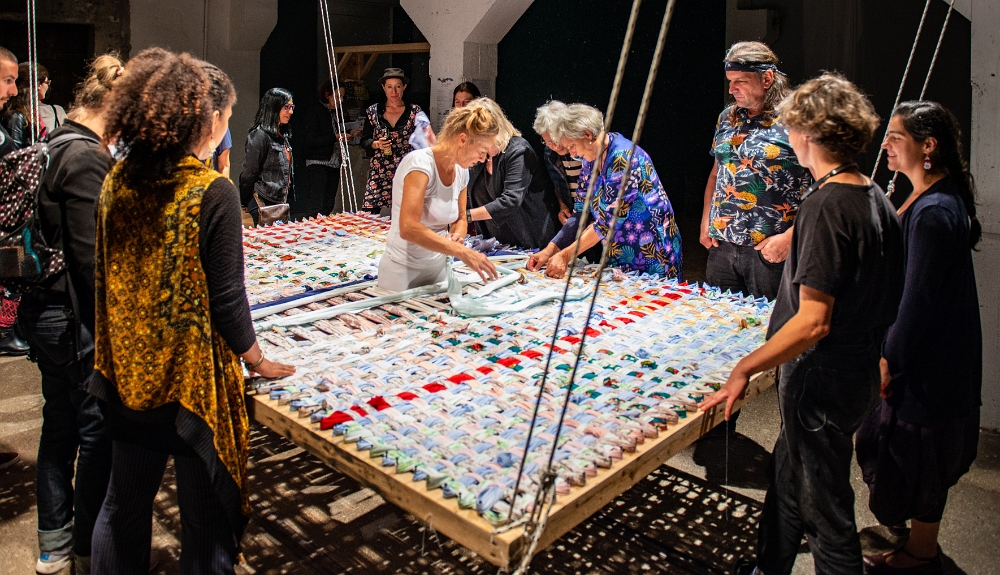
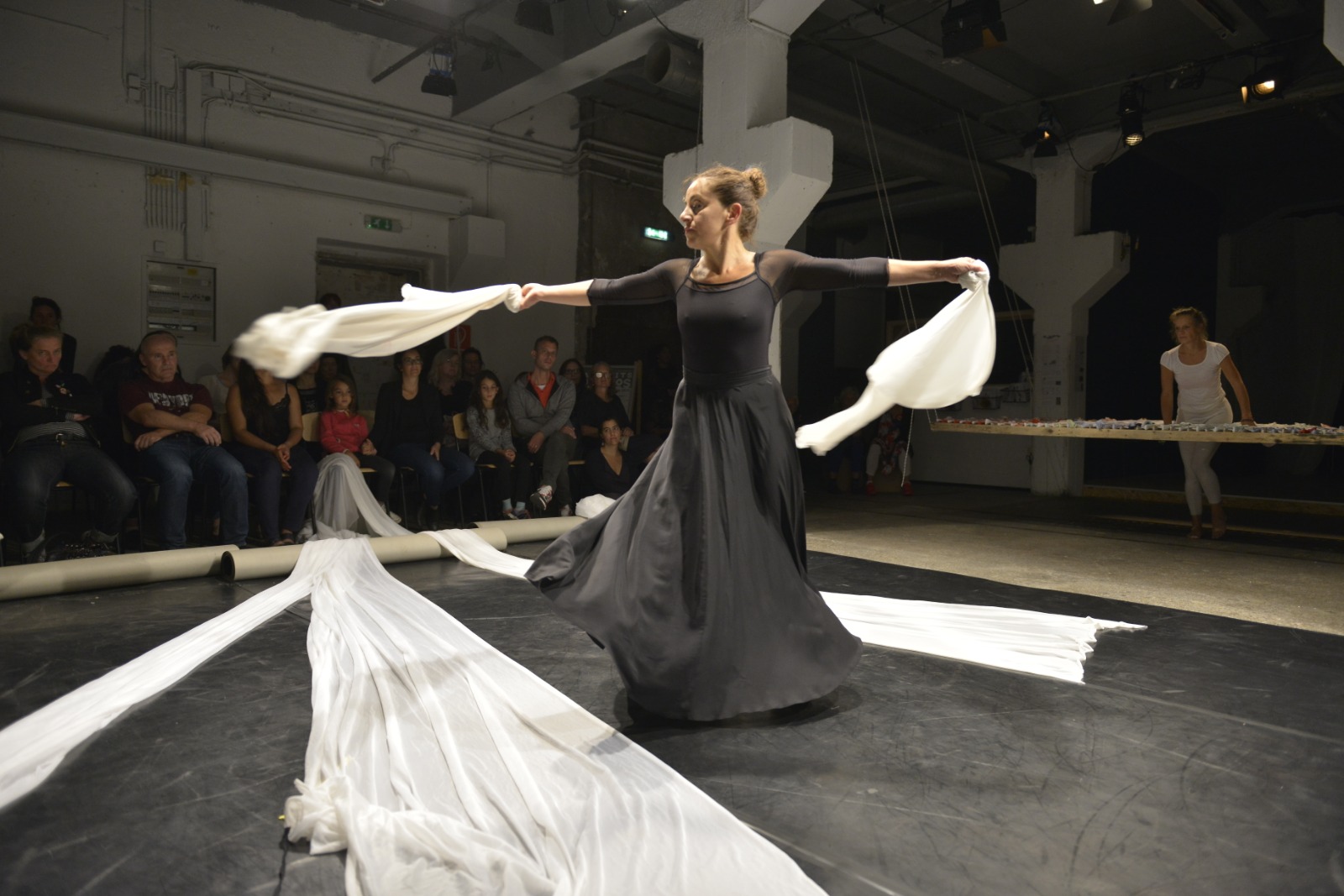
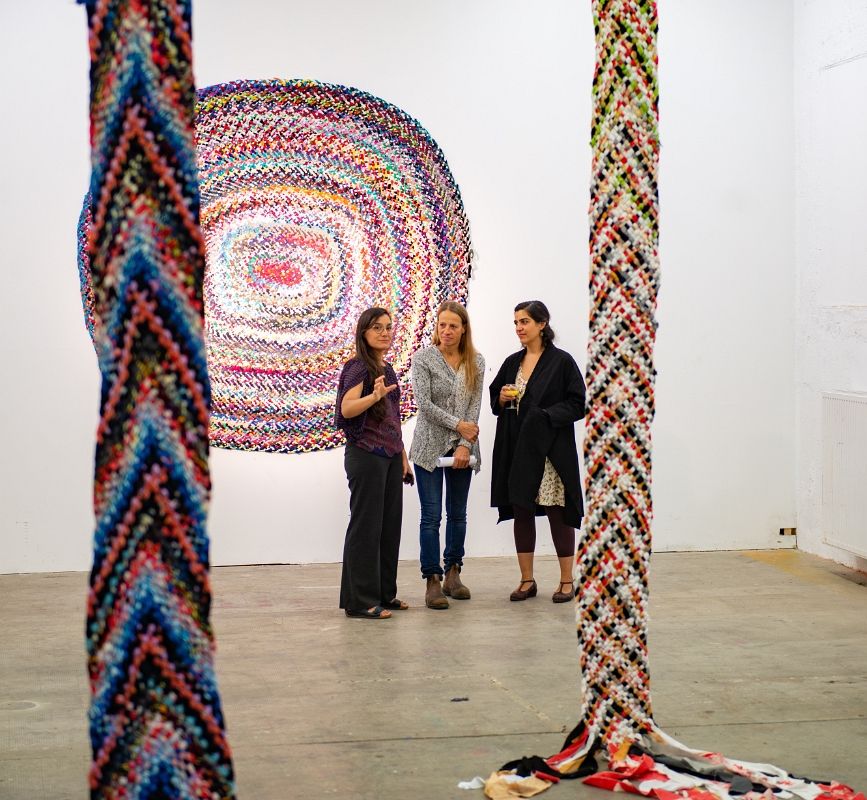
Das Abendprogramm am Samstag beinhaltete Doro Serors dauerhafte Performance “The Joy of Weaving – Interweaving“, in der das Publikum bei der endgültigen Fertigstellung einer großen, bettgroßen Weben aus recycelten Stoffen half. Zwei weitere Aufführungen wurden präsentiert, während Doro weiterwebte. Zuerst führten Claudia Urrutia und Violetta Graveline „Ventres en Jeu” (Unser Bauch steht auf dem Spiel) auf, um die politische Kontrolle von Frauenkörpern zu erforschen. Es folgte das Solo “Creta” der Tarantella-Tänzerin Maristella Martella mit elektronischer Live-Musik von Gabriele Panico. Alle Vorstellungen wurden herzlich applaudiert und der Abend endete damit, dass wir uns alle um die gewebte Matte versammelten, um mutige Freiwillige in die Luft zu werfen.
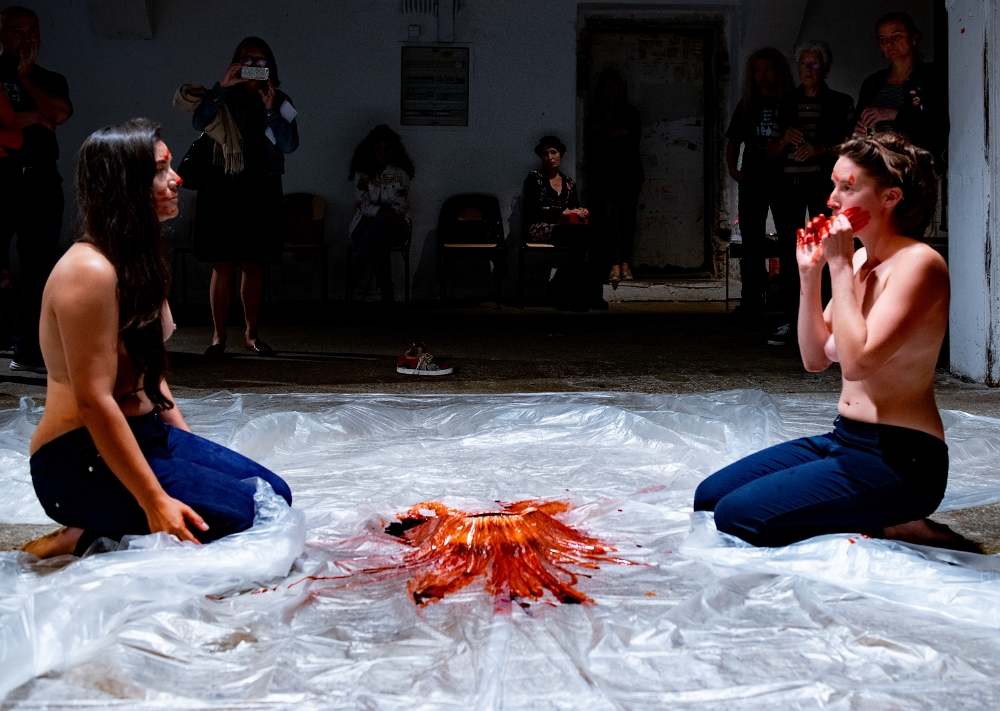
Die Workshops mit Claudia Urrutia (Gesang und Body Percussion) und Maristella Martella (Tarantella) waren gut besucht und für die Teilnehmer sehr lohnenswert. Leider musste der zweitägige Clownworkshop mit Josune Goenaga wegen zu geringer Anmeldungen abgesagt werden. Auch am Samstagnachmittag waren nur sehr wenige Zuschauer anwesend, um Filme von Sylvie Marchand und Doro Seror zu zeigen – wahrscheinlich, weil es das letzte wunderschöne sonnige Wochenende des Jahres war. Am Sonntagnachmittag gab es eine gute Beteiligung an Präsentationen über das Magalena-Projekt und die Magdalena-Festivals in München, Frankfurt und Mexiko. Das Festival endete am Sonntagabend mit dem Abschluss von Doro Serors Ausstellung “Joy of Weaving – Upscaled” in Halle 6.
Jetzt sammeln wir die Dokumentation und vervollständigen die Projektberichte und Abrechnungen. Wir möchten uns nochmals bei allen bedanken, die dieses Festival finanziell unterstützt haben, sowie bei denen, die sich freiwillig für dieses Festival gemeldet haben. Ohne Sie hätte das Festival nicht stattfinden können!
A space / time and the silence with in me
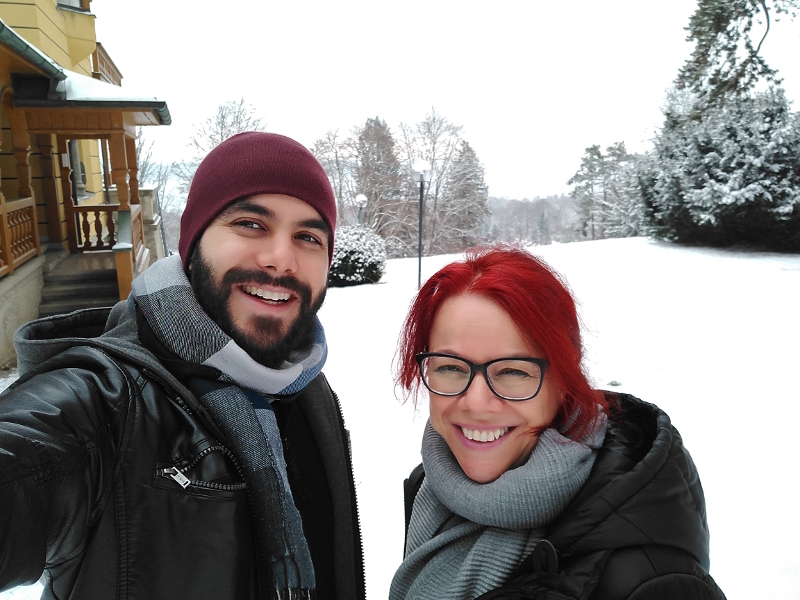
Helen invited me the the Magdalena München Season 2018, to participate in a three-month artistic residence in Munich, in Villa Waldberta, a fantastic place, a wonderful house full of so many stories. It was my first artistic residence, and also the first time that I and Ivan, my son, experienced snow – and its silence. Ivan also was artist in residence, he’s a musician and a martial arts’ practitioner, and participates in the workshop and in the performance of Tapete Manifesto. What a joy to have him at my side in this adventure!
We stayed in an apartment with a lot of light, with huge windows from where you could see the Starnberg lake and the Bavarian Alps. I remember getting up at five o’clock in the morning just to see the sun rise.
When I started this residence I had some idea about the challenge and about what I was looking for with my work, about the possibilities for a encounters and exchanges with other artists, but what I came to live by far surpassed my expectations.
I presented the performances Tapete Manifesto and Triptych: Bones, Red Lipstick and Hamlet in the theaters HochX and Meta Theater, created the performance Janela Manifesto for the event “Break Through #20” in the atelier of lovely Doro Seror and gave the Tapete Manifesto workshop. By the end of the residence, there had been seven presentations of six different performances.
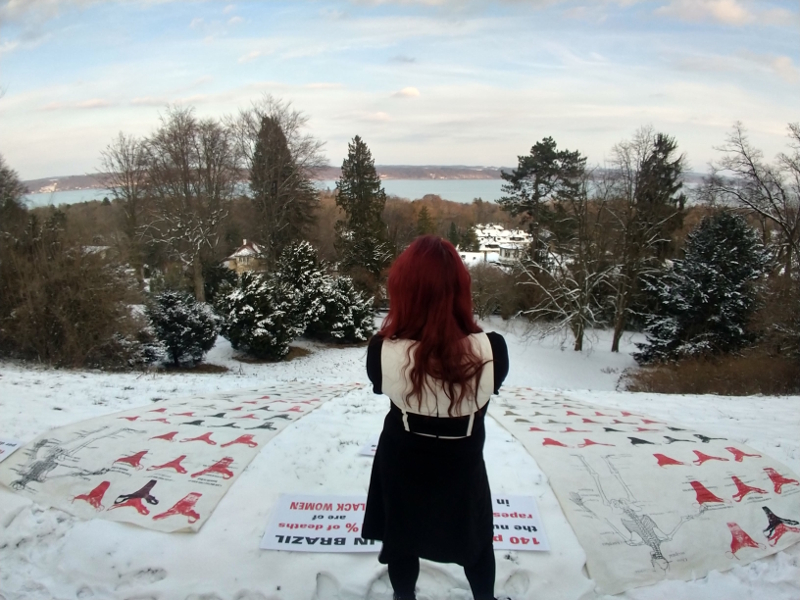
In my workshop Tapete Manifesto, which is centered on the topic of violence against women, incredible artists from different countries participated. At the end of the workshop, we presented a performance which was, in its very essence, a poetic manifesto. We reflected on violence against women using our own bodies and the histories of violence we ourselves had experienced …
I found an echo of this tragic tradition in Mexico and in Serbia.
I researched the statistics of violence against women in Germany, and found out that the sad reality is that 360 women lose their life each year due to violence.
In Brazil, this figure is even a lot more frightening: more than 5.400 women killed every year.
Brasil comes fifth of the world’s countries with regard to the murder of women.
In Brasil, every 1.5 hours there is a femicide, and 5 women are raped every hour.
The performance Tapete Manifesto had various ramifications, such as Janela Manifesto in Doro’s atelier, and in the installation Invisible Spaces – Women in Art by Kordula Lobeck de Fabris. For our reflections, it was important to be in contact with these other spaces and formats, and it was essential to exchange experiences with these two artists, both full of great sensibility and force. During these three month, apart from artistic exchanges and inspiration through her art, lovely Kordula also was my companion in residence at Villa Waldberta, where she created wonderful moments with her delicious meals.
I participated in three workshops with some very inspiring amazing artists, and was inspired by the different affections that strengthened my soul on different levels. Deborah Hunt and her masks, what an intense and sensitive work that I experienced while constructing my masque! With Jill Greenhalgh I found my strength and the control of my stage presence in the silence of the stories. The exchange with Helen Chadwick was so fluid and inspiring, the encounter continues to reverberate within me. She collaborated with me in my performance Triptych: Bones, Red Lipstick and Hamlet, and I contributed, with a story of mine, to her performance TRUTH.
I am a Brasilian artist, and in my country, developing forms of artistic research and or experimenting with forms of artistic expression is considered an “unnecessary luxury”. My art is continuously being interrupted by the struggle to survive. I have to re-invent myself every day, especially at this very moment when a backlash dominates politics which tries to eliminate all options for art, for culture and for dreams. During those three months in Munich, I lived the difference: there, artists receive a very different treatment, there were opportunities, there was respect, and an understanding of the importance of culture and artistic creation.
The artistic residence allowed me to experience collaborations that developed naturally at the festival, and it allowed me to stop with all these issues of the lack of time / space which I am experiencing in the city of São Paulo.
I’ll never forget the walk with Andy on a very cold day in Munich, the long hike to get to know the monastery of Andechs with Jana, Ivan and Zoe, where we kept finding lots of interesting “pebbles” along the way …
The parties and exchanges with Claudia Urrutia, Silvie Marchand, Teatret Om, Annie Abrahams and all the other incredible people I came to know… Between the artists participating in this residence there was enough time, a lot of creativity and trust. Our stories, voices and quests were met with recognition.
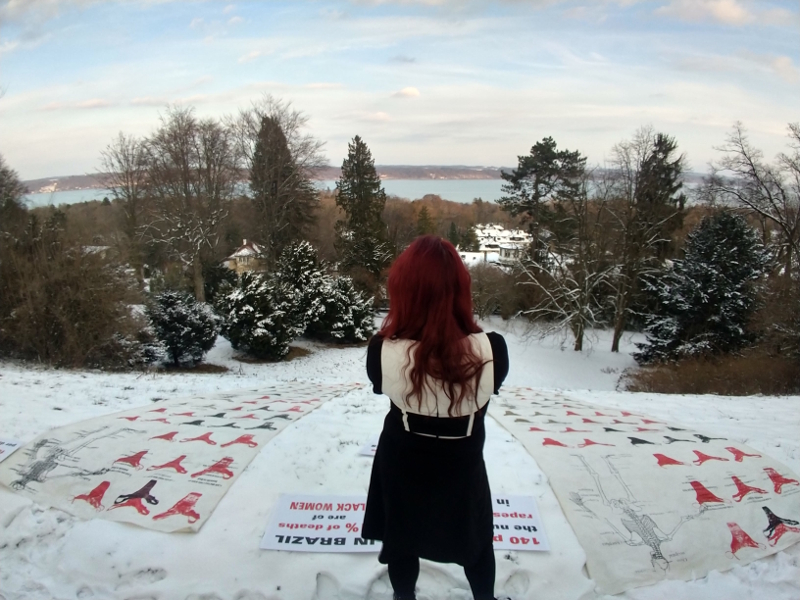 I spent a very long time by myself wandering along the Starnberg lake and creating a cellphone video for my Ofélia to immerse in…
It was a time of reflection, clashes, a lot of work, train rides coming from and going to places to present my performances and to watch the performances of others… Everything happened with a lot of affection, coffee, wine, with these German sweets – I already forgot the name, it is only produced at this time of the year – and the best beer ever! … In this space / time, my heart opened wide for my artistic creation, and it was during this space / time in contact with the silence of the snow, of the lake, in touch with my own story (made of silences, too), that I was able to reconnect myself with my peace, with my silence, with my force as an artist and as a woman …
Each Magdalena Festival, created and produced by women in this world is, in the first place, a revolutionary act. An act in which we are weaving bonds in a net made of dreams, desires and accomplishments. We set our voices free, we can hear these female voices, their screams … This saves us, inspires us and makes us continue, makes us venture and believe in artistic creation.
This artistic residence organized by Helen could not have been different, and it has brought us something very essential: the space; the time; the silence.
 I admire Helen, and I’m inspired by her courage to set up Magdalena Season, it has been a real marathon for her and for all of us. Helen worked with little resources, but with the power of her dreams. For me, it seems that she re-invents, brings fresh breath and creates new possibilities by creating this artistic residence, maybe something like a new philosophy in the heart of all Magdalenas.
We left Munich in blooming spring, our hearts filled with the flowers of our encounters and exchanges, full of energy and inspiration, filled with hopes for new projects and with the wish to create a space / a time to realize a festival in São Paulo.
In my artistic being, in my dreams, I’m always looking for an empty space, a space / time, I’m looking for the silence within me, the silence I need for my creations, and for the opportunity to enter into relations and exchanges with the others on the deepest possible level.
This is what I found during this artistic residence, during this journey.
I thank you, dear Helen, from the bottom of my heart for the richness and courage of your project, and you, dear Karin Sommer, for realizing the meetings for all the artists in residence (Jourfix) with so much love that kept us together with all our differences. I thank everyone from Villa Waldberta team and those dear amazing women and powerful artists that shared that incredible place with me, to my dears Angelika Schindel and Leonie Sontheimer, to my dear son and to my dear partner Ulysses and to my mother who inspires me. A special thank to Karine Legrant and to the Goethe Institute for supporting me in this experience.
Thaís Medeiros
Translated from the Portuguese by Dr. Christina Märzhäuser (read the original Portuguese post here).
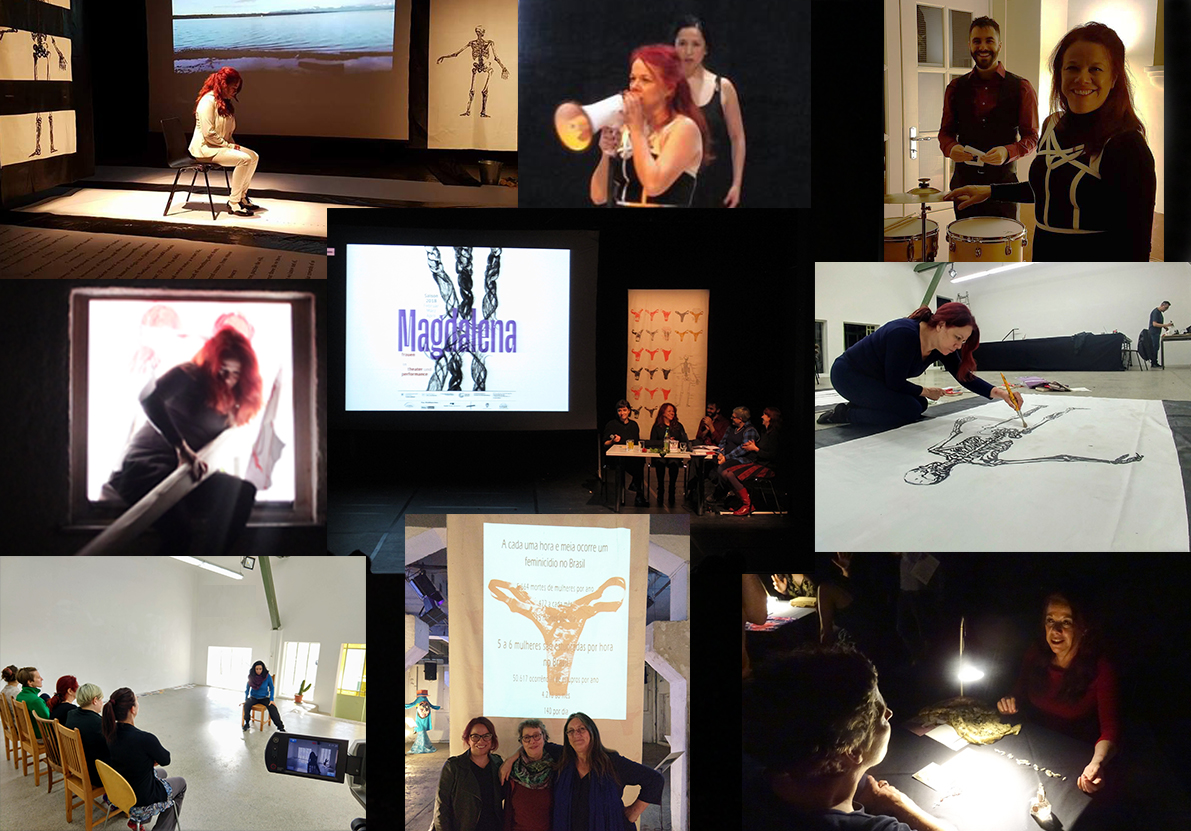
Das Festival “KNOT” wurde mit großer Freude verkündet!

Nach dem großen Erfolg der dreimonatigen Magdalena Saison im letzten Jahr wird „Magdalena München“ Mitte September 2019 mit dem Programm KNOT unter der künstlerischen Leitung von Raquel Ro (Spanien/Deutschland) an diversen Orten in der Landeshauptstadt stattfinden. Workshops, Performances, Diskussionen und Netzwerk-Veranstaltungen mit internationalen und lokalen Künstlerinnen des Magdalena-Netzwerks stehen auf dem Programm im Instituto Cervantes, Theater PATHOS München sowie im EineWeltHaus.
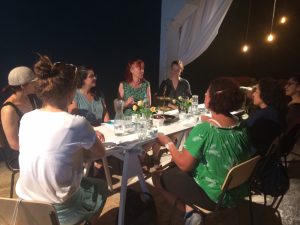 KNOT wurde am 24.7. im PATHOS den Münchner Medienvertretern und Gästen präsentiert. Von Donnerstag, dem 12. September 2019 bis Sonntag, dem 15. September gibt es Dokumentarfilme, Künstlergespräche, eine „Offene Bühne“ auf der sich lokale KünstlerInnen mit ihrer Arbeit vorstellen werden, Performances und Präsentationen. Am 14. September 2019 bietet KNOT einen Gesangworkshop mit Claudia Urrutia (PATHOS), am 15. September 2019 einen Tanzworkshop mit Maristella Martella (EineWeltHaus) und am Wochenende vom 28./29. September 2019 den zweitägigen Clown Workshop „The pleasure of being a ridiculous woman“ mit Josune Goenaga. Die Anmeldung zu den Workshops ist ab sofort online möglich.
Produzentin des diesjährigen Projekts ist wiederum Helen Varley Jamieson (Neuseeland/Deutschland). Mitwirkende Künstlerinnen sind u.a. Sylvie Marchand (Frankreich), Doro Seror (Deutschland/München), Claudia Urrutia (Chile/Frankreich), Bárbara Carvalho (Brasilien/Deutschland), Josune Goenaga (Spanien/München), Maristella Martella (Italien) sowie Cecilia Bolaños (Mexiko/München). Lokalen Künstlerinnen der “Offene Bühne” Performanceabend sind Alina Belyagina, Patrizia Bradley-Sorgenfrei, Katherine López, Christina Maria Pfeifer, Gina Saggiante und Susanne Schütte-Steinig.
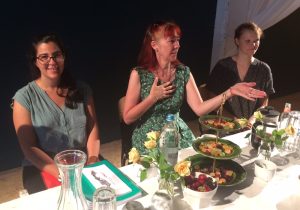
Magdalena München ist Teil des 1986 gegründeten und weltumspannenden Magdalena-Projekts. Das Ziel des dynamischen, trans- und interkulturellen Netzwerkes ist es, die Sichtbarkeit der kreativen Arbeit von Frauen in Theater und Performance zu erhöhen. Es hat weltweit inzwischen über 100 dokumentierte Festivals und Veranstaltungen sowie zahlreiche Publikationen hervorgebracht.
Magdalena München dankt allen Förderern und Partnern, die das Projekt KNOT ermöglichen. Es sind u.a. Kulturreferat der Landeshauptstadt München, künstlerhaus Villa Waldberta, PATHOS München, Bezirksausschuss des Stadtbezirks 2, Ludwigsvorstadt Isarvorstadt, Bezirksausschuss 9 Neuhausen/Nymphenburg, Migrationsbeirat München, EineWeltHaus München e.V., Instituto Cervantes Munich, Casa Do Brasil e.V., Nord Süd Forum München e.V., leonrod – haus für kunst, kultur und kommunikation, dreiUNdreizig und THEMAGDALENAPROJECT. Der Performance “Créta” ist gefördet von Programmazione Puglia Sounds Export 2019.
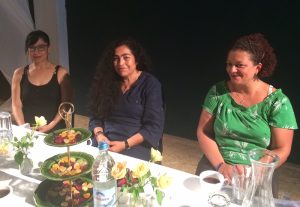
Weitere Informationen und jeweils aktuelle Hinweise zum Programm gibt es unter http://www.magdalenamuenchen.de/knot-2019/
Pressekontakt: Angelika Schindel, München, mobil 0171-5220226, presse@magdalenamuenchen.de
Fotos: Angelika Schindel.
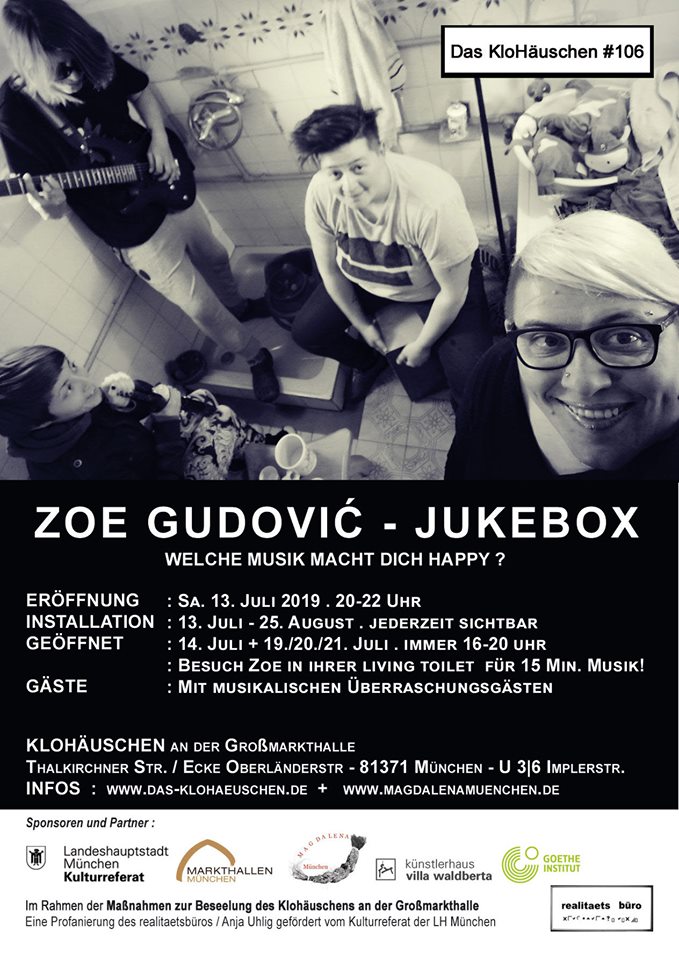
Zoe kehrt nach München zurück!
Die dynamische serbische feministische Aktivistin und Künstlerin Zoe Gudović kehrt auf Einladung von Das KloHäuschen nach München zurück. Im Juli und August ist sie wieder zu Gast in der Villa Waldberta und wird Das KloHäuschen mit einer neuer Installation besetzen.
Aufruf für kurze Aufführungen / Performances
Im September 2019 findet die vierte Magdalena München Veranstaltungsreihe statt: das Festival „Knot“ bietet Aufführungen, Dokumentarfilme, Workshops und Diskussionen. Klick hier für das Konzept, Programm und weitere Infos: www.magdalenamuenchen.de/knot-2019.
Damit sich mehr lokale KünstlerInnen durch ihre künstlerische Arbeit vorstellen können, organisieren wir eine „Offene Bühne“ am Freitag 13. September. Wir laden Euch ein, kurze (max. 10 min.) Aufführungen / Performances zu zeigen. Es kann ein Auszug aus einer längeren Aufführung sein, ein Work-in-Progress, etwas, das du ausprobieren möchtest, oder eine komplette kleine Aufführung. Wer dabei sein möchte, liest bitte die folgenden Infos und schickt uns Eure Bewerbung zu:
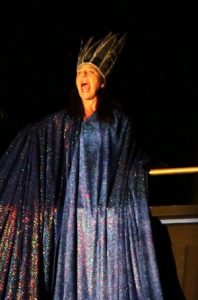
Wer kann mitmachen:
- Künstlerinnen* aus München und Umgebung die am Magdalena Project interessiert sind
- sämtliche darstellende Kunstformen und -formate (Theaterstück, Tanz, Performance, u.s.w.)
Was wir anbieten:
- die Möglichkeit, andere internationale und lokale Künstlerinnen* kennenzulernen, sich zu vernetzen und dem Münchner Publikum Eure Arbeit zu präsentieren
- professionelle Organisation und Performanceabend präsentiert von MC Cecilia Bolaños
- professionell ausgestatteter Theaterraum: PATHOS Theater
- basic Ton und Technik (keine Probenzeit)
- Werbung auf der Magdalena München Webseite, Email Ankundigungen, Pressemeldungen und Abendprogramm
Voraussetzungen:
- die Performance soll nicht länger als 10 min sein
- kurzes Motivationsschreiben: Warum möchte ich bei Magdalena München 2019 mitmachen?
- eine kurze und aussagekräftige Beschreibung Eurer Produktion/Arbeit (1 Seite)
- Kurzbiografien aller Beteiligten
- falls möglich Bild- und Video-Material (Link genügt)
Einsendeschluss für eure Bewerbung ist der 19.07.2019.
Bewerbungen bitte ausschließlich als PDF-Datei an die Email von cecilia [at] magdalenamuenchen.de
Ausgewählte Produktionen werden bis 31. Juli 2019 benachrichtigt. Wir behalten uns das Recht vor Bewerbungen abzulehnen. Der Rechtsweg ist ausgeschlossen.
Noch Fragen? Schreibt uns gerne eine E-Mail: cecilia [at] magdalenamuenchen.de..
Wir sind auch auf Facebook: http://facebook.com/magdalenamuenchen
Spendenaktion
Die Magdalena München-Saison 2018 war ein dreimonatiges, wunderbares Festival von und mit großartigen Künstlerinnen aus Deutschland und der ganzen Welt. Wir werden dieses tolle Projekt durch einen Dokumentarfilm archivieren und feiern. Um die damit verbundenen Kosten für den Schnitt, Nachbearbeitung etc. zu decken, benötigen wir 2000,- €.
Wir würden uns sehr freuen, wenn Sie uns bei der Umsetzung finanziell mit einer Spende unterstützen. Sie haben die Möglichkeit hier direkt mit Ihrer Kreditkarte zu spenden. Wenn Sie eine Banküberweisung bevorzugen, senden Sie bitte eine E-Mail an info [at] magdalenamuenchen.de. Wir lassen wir Ihnen gerne unsere Kontodaten zukommen.
Jede Spende wird gebraucht!
Fundraiser
Please help us to complete the documentary film of the 2018 Magdalena Munich season.
The Magdalena Munich season 2018 was a fantastic three month long festival of and with wonderful artists from Germany and around the world. We will archive and celebrate this great project in a documentary film. To cover the costs, including video editing, we need to raise €2000.
If you would like to support the project, we would be very happy to receive your donation. You can donate here immediately with your credit card. If you prefer to pay by bank transfer, please send an e-mail to info [at] magdalenamuenchen.de and we will send our bank account details.
Every donation is much appreciated – thank you!
The Magdalena München Team.
Marina und Thaís
Diese Reportage ist im Rahmen des Kurses “Film Meets Print” an der Deutschen Journalistenschule entstanden und wurde auf dem Dok-Film Festival vorgelesen. Die Autorin, Leonie Sontheimer, ist Teil des journalistischen Kollektivs Collectext.
Während in Bonn der Weltstar Marina Abramović gefeiert wird, ringt Thaís Medeiros in München um Aufmerksamkeit. Eine Reise in zwei Welten des Performance-Kosmos.
Applaus hat viele Facetten. Manchmal klingt er wie ein Sommergewitter, das auf den Asphalt runterprasselt. Manchmal wie eine Silvesternacht, in der Raketen in den Himmel schießen. Manchmal wie Kuhkacke, die auf Stallboden klatscht.
Der Applaus, der Marina Abramović am 19. April in Bonn auf ihre Bühne begleitet, klingt wie der Ozean – gleichmäßig, voll, tragend. Abramović ist damit vertraut. Sie nimmt den Applaus auf, ohne große Gesten, ohne strahlendes Lächeln. „Guten Abend. Ich bin ein Putzfrau“, sagt die weltbekannte Performance-Künstlerin, bei der Eröffnung der Ausstellung in der Bundeskunsthalle, die ihr Lebenswerk würdigt.
Kein Husten mehr, kein Stühlerücken, kein Flüstern. 500 Menschen blicken gebannt auf die Bühne. Abramović trägt schwarz auf schwarz: Einen Rock, der bis auf den Boden fließt, eine bis zum Hals zugeknöpfte Bluse, die glatten Haare, ebenfalls schwarz, hinter die großen Ohren gestrichen. Ihr Make-Up ist dezent, kein Schmuck, nur die roten Fingernägel geben den Zuschauer kurz Halt, bevor sie sich in den Augen von Abramović verlieren. Die Augen. Sie verkünden Abramovićs bedeutendste Botschaft. Sie sagt: „Es ist wirklich wichtig, sich zu konzentrieren. Es ist wirklich wichtig, zu verstehen, wenn du performst. Präsent zu sein, hier und nirgendwo sonst.“
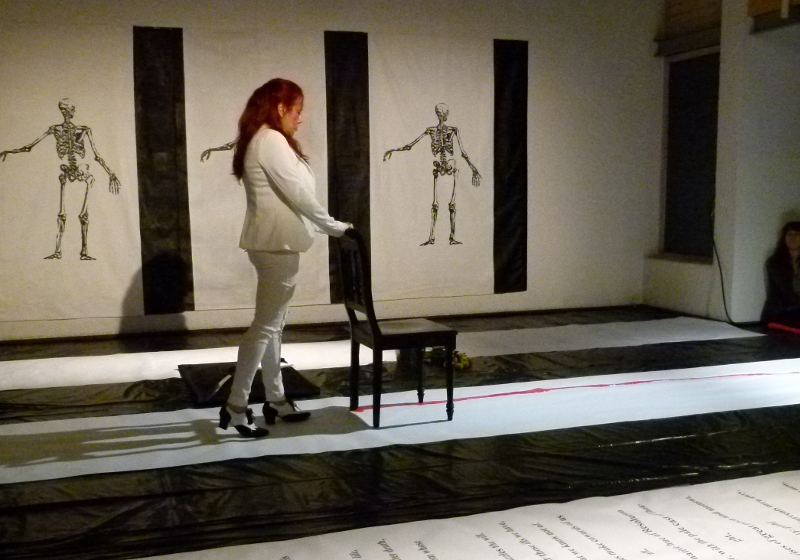
 Sechs Tage später. Thaís Medeiros verharrt für ein paar Minuten, ehe sie die kleine Bühne in einem Münchner Vorort betritt. Medeiros ist ganz in weiß gekleidet. Die Hose schmiegt sich an die Beine und betont ihren muskulösen, kleinen Körper. Die rot gefärbten Haare hat sie sich aus dem Gesicht gebunden, eine Strähne hat sich gelöst und hängt in ihrer Stirn. Medeiros bittet wortlos um Erlaubnis und tritt auf die Bühne. Gebannt verfolgen elf Zuschauer, wie Medeiros einen Stuhl an der Lehne packt und ihn langsamen, konzentrierten Schrittes nach links über die Bühne schleift.
Aus einem der hinteren Stuhlbeine fließt dickflüssige, rote Farbe und hinterlässt eine Spur auf der weißen Papierbahn, die auf dem Boden ausgelegt ist. Medeiros Augen werden glasig, als könne jederzeit eine Träne heraustreten. Die Lippen sind leicht geschürzt, das ganze Gesicht unter Spannung. Ihr Blick ist auf einen magischen Punkt jenseits des Theaters gerichtet. Dennoch fühlt sich Medeiros mit dem Publikum verbunden. Zum Ende der Aufführung von Triptico schlägt sie auf dem harten Boden eine Rolle vorwärts und bleibt einige Sekunden liegen – Arme und Beine von sich gestreckt. Klatschen. Wären sie 500 statt nur elf, klänge es vielleicht wie der Ozean. So sind es kleine Wellen, die gegen eine Kaimauer plätschern.
Zwischen den beiden Auftritten liegen sechs Tage, sechs Autostunden – und Welten. Auf der einen Seite der Weltstar Marina Abramović, die mit ihrer Retrospektive alle Feuilletons stürmt. Auf der anderen Seite Thais Medeiros, die ihre Performances mit kommerzieller Malerei querfinanziert. Medeiros lässt Methoden aus Theater und Kung-Fu in ihre Arbeit einfließen. Der Name Abramović steht synonym für jede Art von Performancekunst. Abramović, die Vorzeigekünstlerin, die Ikone ist 71 Jahre alt. Mit Anfang 20 begann sie in Serbien Texte, Zeichnungen und Konzepte zu veröffentlichen. Ab 1973 zeigte sie Performances, einige erregten weltweit Aufmerksamkeit. Die Karten für einen Workshop, den sie im Rahmen der Eröffnungsfeierlichkeiten in der Bundeskunsthalle gab, waren in weniger als 20 Sekunden ausverkauft.
„Marina hat die Performance als Genre etabliert“, sagt die 57-jährige Brasilianerin Thaís Medeiros. Für drei Monate residiert sie in Feldafing in einer alten Villa, als Gast der Stadt München und des Goethe-Instituts. Das Festival Magdalena München, auf dem sie mehrere Performances zeigt, möchte Frauen in Theater und Performance sichtbarer zu machen. „Es gibt viele Frauen auf der Bühne. Aber sie erzählen nur selten ihre eigenen Geschichten. Meistens sprechen sie ein Skript, das von Männern geschrieben wurde“, erklärt Helen Varley Jamieson, die künstlerische Leiterin In ihrer zweiten Performance Tapete Manifesto thematisiert Medeiros die Gewalt gegen Frauen in Lateinamerika.
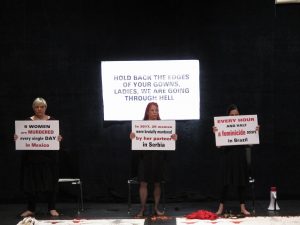 Gekrümmt liegen darin Medeiros und vier weitere Frauen auf zwei weißen Stoffbahnen mit aufgemalten Unterhosen und Skeletten. Die Frauen tragen schwarze Kleider, Schuhe mit Absätzen und rote Tücher über dem Gesicht. Ein Trommelschlag durchbricht die Stille. Nach fünf Sekunden ein weiterer Trommelschlag. Die Frauen regen sich nicht. Dann schlägt der Percussionist Trommel und Becken gleichzeitig. Die Frauen heben ihre Knie und spreizen ihre Beine. Der Percussionist drückt eine Taste auf seinem Laptop, ein Gewirr von Stimmen, sphärische Sounds. Die Zuschauer, die am Rand der Bühne sitzen, werden unruhig, wenden ihre Blicke ab von den Frauen, die da liegen, mit gespreizten Beinen. Hinter der Bühne hängt ein Plakat: „Haltet Eure Ballkleider hoch, Frauen. Wir gehen durch die Hölle.“
Am Ende gehen die fünf Künstlerinnen mit Schildern durch den Raum. „Alle anderthalb Stunden geschieht ein Femizid in Brasilien“, steht auf einem. „40 Prozent der Femizide werden von den Partnern begangen“ auf einem anderen. Die fünf Frauen legen ihre Schilder direkt vor die Füße der 30 Zuschauer. Dann wird das Licht im Saal gedimmt. Applaus, diesmal wie ein Sommerregen. Erst ein paar Tropfen, dann setzt der Regen ein und entspannt die aufgeladene Luft. „Wenn wir das Stück in Brasilien aufführen, dauert es manchmal 20 Minuten, bis jemand die Stille bricht“, erzählt Medeiros. Am liebsten performt sie draußen in der Öffentlichkeit. Dort fühle sie die ganze Energie eines Ortes. Und sie erreicht Menschen, die niemals in ein Theater kommen würden.
Performance-Kunst ist oft politisch. Und sie lebt immer von Extremen und Tabubrüchen: Gewalt, Sex, Tod. Und sie ist nicht einstudiert wie ein Theaterstück. Sie reagiert auf die Stimmung der Zuschauer, spielt mit ihr. Marina Abramović versteht sich nicht als politisch. Wenn sie in ihrer Arbeit etwas erforscht, dann ist es der Mensch. 1974 stellte sie sich sechs Stunden lang in einem Studio in Neapel der Öffentlichkeit als Objekt zur Verfügung. Auf einem Tisch lagen 72 Gegenstände, mit denen das Publikum sie berühren, ja sogar verletzen konnte: Eine Rose, Parfüm, Honig, Brot, Nägel, Metallketten und ein geladener Revolver. Abramović: „Ich war nicht daran interessiert, zu sterben. Aber mich interessierte, wie weit das Publikum gehen würde, wenn die Künstlerin gar nichts macht.“
Abramović bereitet ihre Performances jahrelang vor. Ihre letzte fand 2014 in London statt. Die nächste ist für 2020 angekündigt. Nach der Eröffnungsrede in Bonn verschwand sie in einer Traube von Fotografen und Fans, die sie festhalten und berühren wollten. Die persönliche Begegnung mit Abramović, das war auch bei ihrer New Yorker Performance 2010 The Artist is present für viele Besucher ein berührendes, auswühlendes Erlebnis.
Thaís Medeiros hat in den drei Monaten in München an fünf Diskussionen teilgenommen, einen Workshop geleitet und sieben Performances aufgeführt. Nach Triptico steht sie für eine Minute allein neben der Bühne und vollführt ein innerliches Ritual, um den Raum so zurückzulassen, wie sie ihn betreten hat. „Ich habe nicht die Illusion, dass meine Arbeit auf romantische Art die Welt
verändert“, sagt sie.
Von Leonie Sontheimer
Love from the toilet // Das KloHäuschen
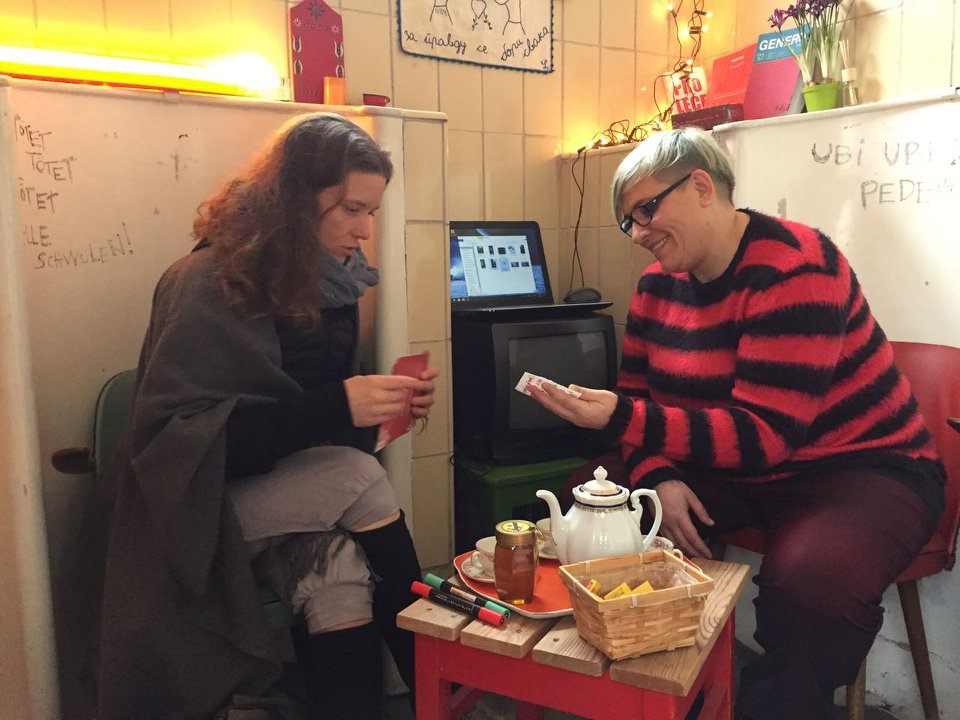
Zoe Gudović writes about her project DISSOCIATION at Das KloHäuschen during the Magdalena München Saison 2018.
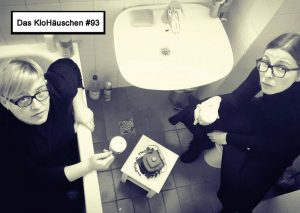 A year ago Helen Varley Jamieson invited me to take part in the Magdalena München Saison 2018 and share my experience from Serbia on merging art and activism. The lecture was planned for 6th of March, and Helen insisted to have me there in February, so I gladly agreed and took part in other workshops on the programme. Helen soon forwarded the toilet link, link of the art space called Das KloHäuschen, to the mailing list of all people invited. This public toilet totally occupied me, and I knew it was my space, a space where I was supposed to create something, finally something mine. Helen was so persistent and attentive at the same time as if she knew that her idea would be one of the best things that have happened to me lately. This chance I was given helped me realize who I was, and my new identity as a TOILET ARTIST was born.
When I stepped into the toilet, curated by Anja Uhlig, my heart bounced, filled both with passion and curiosity, and wrapped in the warmth of love. I knew that the toilet was my fundament, my home, and I wished it was my living room where my visitors would feel at home. I come from a large family, where 6 of us shared a space of 36 square meters, sharing everything, without any private space. That`s why the toilet was so important, as the most intimate part of me and the most intimate part of that space, but yet not intimate at all since it belonged to others too.
Nicola von Thurn‘s assistance gave me joy and a chance to meet this great artist from Munich. This installation would not be possible without her, since she brought and built in it a part of herself, her furniture, plus invested a decorating effort.
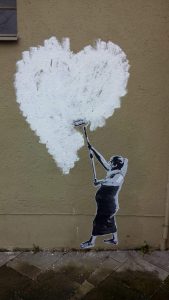 At the very beginning someone left a gift to me – graffiti. It was the best possible welcome gift, but also an intrigue, since after the installation was over and I left, the graffiti also vanished.
The subject I worked on with this installation was DISSOCIATION. It was inspirational for audience visiting my toilet/living room too, and many people came because they felt the same, but were unwilling to talk about it a lot. You can`t get a cure against dissociation, but can just do your best to heal it to some extent using face to face method. Therefore, each visitor could spend 15 minutes with me, being offered a space for her/him as well, since in that space I opened the contrasting questions of violence and love!
Various testimonies and confessions happened in there, in my living room, in that men`s toilet. Many visitors said they survived violence, rape, that we felt violence much more than we were able to express, due to our low level of emotional literacy and lack of knowledge of what love is and how it works.
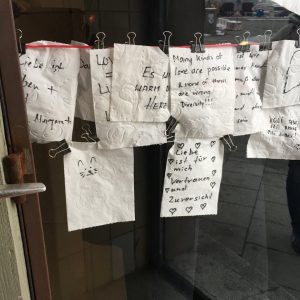
For 3 days, including around 21 hours of performing, 70 people went through the Dissociation installation, leaving behind them messages on the toilet paper on what love meant to them.
The combination of me and the toilet, of my story and the whole world, attracted many to peep in, step in, ask, open themselves, and the media got interested as well. When I left, the great Anja Uhlig and the toilet received an award, dressed as one could only wish for, in warmth and openness of my living space.
A wonderful organizer, but first of all a friend, and now she could even become my manager – Helen – made sure every detail was in place, that I always had someone at hand to assist me and volunteer, and I would love to express my gratitude to all the dear people who helped, photographed, talked, shared space and time with me in the very cold weather, since it was February and it was all in the toilet. It was moving to see people waiting in the queue to step in and spend some time with me, see the installation, bringing me beer and blankets to warm myself up. The artist Dorothea Seror lent me her cups and as a present gave me my favorite clogs.
Why people were curious: the toilet brings on the personal perspective, makes them identify with the subject, and they are eager to talk, to communicate. They said they wanted to spend some time with the artist. So all the visitors who made it, had me for a while.
This experience would not be possible if the powerful fairies did not join their forces. I got my first art residence – Villa Waldberta – the most beautiful space I have ever seen. And I got supported by Goethe-Institut Belgrad.
I am looking forward to get back to the Villa Waldberta , and see you this year too, because I no longer know how to live without Das KloHäuschen.
Zoe Gudović, translated by Ana Imširović Đorđević.
Beautiful, interesting and wise!
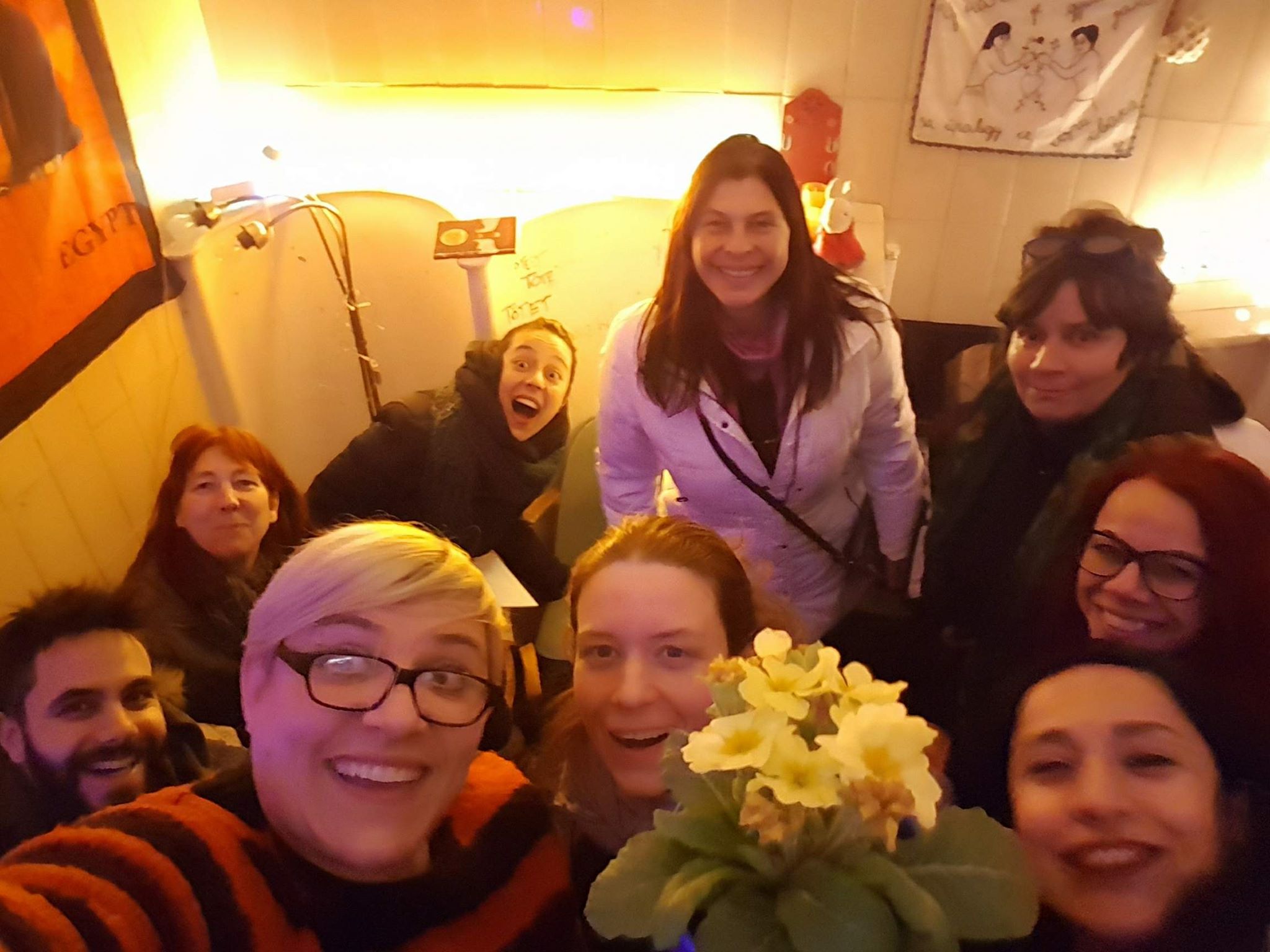
Zoe Gudović writes about her experiences at the Magdalena München Saison 2018.
When I decided to come to Magdalena Munchen 2018 and take part in the programme, I knew it would be exhausting, but above all interesting and that I would learn so many new things.
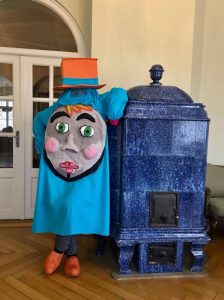 What I felt the first was Helen Varley Jamieson and Andrea Aß‘s warm welcome. They brought me to this magical Villa Waldberta, where I got the apartment C, with a view over Starnberger See. Oh, is there a better privilege than being at such a wonderful place, with even more wonderful people?
The 40 days I spent there I was lucky to have the dream team around me – Deborah Hunt, Thaís Medeiros , Kordula Lobeck de Fabris, Jana Korb. Our moments of happiness, tensions, conversations, joint meals, pushed away all the possible deficiencies, and it was my home for a while.
In the organization of Karin Sommer, we had Jourfix at the Villa Waldberta, so each of us had a chance to present our work to local people. Karin is gifted to make gorgeous food and drinks that make everything so relaxed, and yet professional.
I adore Deborah`s work. That woman always makes me a better person who thinks about how and where she should head to. Mask making workshops and preparations for performance are exciting, smart, and yet require a lot of energy. But throughout the entire day you work on yourself, create for yourself, while being a part of the whole thing at the same time. Deborah knows very well to respect the freedom you have in the process. It was great and subversive to play it in a large shopping mall, where people reacted with enthusiasm, but sometimes were puzzled too. Both children and adults watched and wished to touch the masks, to be a part of the performance.
The experience I have had with Tapete Manifesto was deep, emotional and empowering. For the first time I practiced Kung Fu, and it was good, I would love to learn more. When we dived into the subject, we concluded that violence against women affects, or should affect, everyone. We had a demanding and liberating process. With drums, lead by Thaís Medeiros, we performed in HochX and took the audience`s breath away, as we wanted to, since something is being taken away from women every now and then.
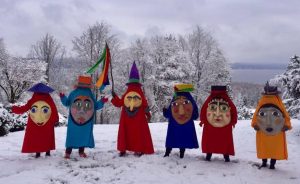
During my stay, I was lucky to celebrate my birthday in the Villa. I enjoyed food, drinks and great people, plus got a gift from Jana Korb who played her presentation at the pavilion. My heart was almost stopped by all that beauty.
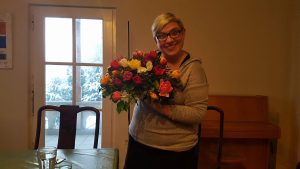
The time I spent with Kordula Lobeck de Fabris, and her great installation, taught me more about migrants and war, and I was also lucky to meet her super daughter.
The beginning of March also brought me joy and love, since I met my old friends from Teatret OM , whom I know for over 20 years, i.e. over half of my life. I saw the terrific Sandra Pasini, hugged Antonella Diana, and also the great Helen Chadwick the same evening. The chance to meet them and see their works makes me a richer person.
Helen and Andy knew I should meet the local crew too, so they invited us to join them on Wednesdays for the traditional Bavarian evening, Stammtisch.
And one cold day our dear Andy took us for sightseeing all around Munich.
Some beliefs say it takes 40 days to resurrect, and I managed to be born, to die, and to be reborn in my 40 days stay, since everything Helen planned was so beautiful, interesting and wise.
With thanks to the Villa Waldberta and the Goethe institut Belgrade.
By Zoe Gudović, with translation by Ana Imširović Đorđević.
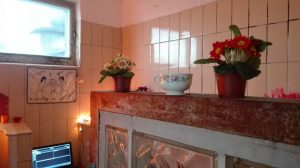
The Magdalena Project at the IETM
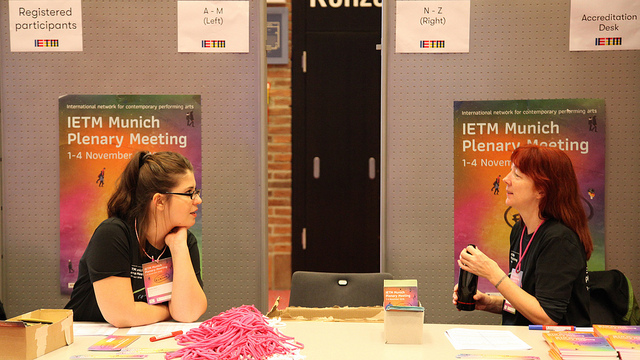
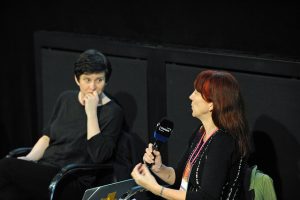 One of the panels at the IETM addressed the topic of “The gender of the future”: “Gender equality is far from being a reality, with more men than women leading companies and theatre institutions, it’s as simple as that. The reactions to this fact vary widely: women career movements fight for female leadership; others see this approach as just a replacement of one power system by another. The latter point out that new structures, e.g. in independent theatres, are less patriarchal for a structural reason. And the demands for quota in employment schemes are countered by the approach aiming to develop a new concept of intersectional diversity in cultural institutions.”
Helen Varley Jamieson presented the Magdalena Project on this panel, describing how the Magdalena Project puts its energy into creating a new feminist structure rather than fighting for more representation of women in existing patriarchal structures. She also discussed other feminist networks she is involved with, including Faces (women in new media and digital art) and the Eclectic Tech Carnival (feminist tech, art and activism network and event), as examples of alternative models.
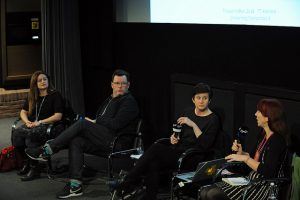
Other Magdalenas from Münich who participated in the IETM were Sabine Bollenbach and Gina Saggiante Montero. There was a lot of interest from women attendees, and some who had been at previous Magdalena events.
Follow us on:

